Functional Jelly Label Review Checklist Before Printing Packaging
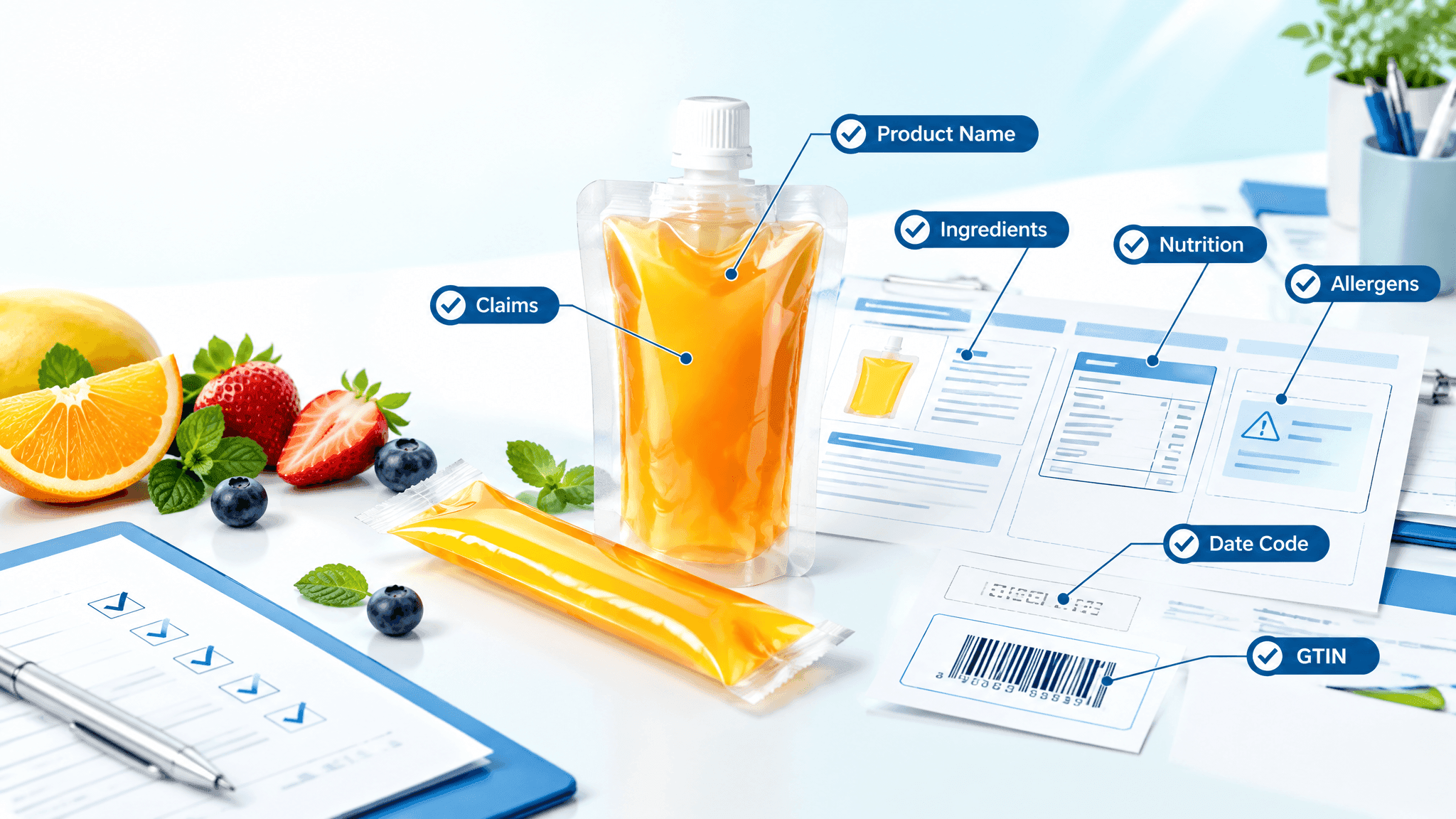
Packaging artwork should not move to print until the formula, serving size, market requirements and commercial pack are aligned. This buyer checklist shows what brands and importers should review on a functional jelly label before creating printed packaging inventory.
Functional Jelly Label Review Checklist Before Printing Packaging
A functional jelly label is not only a design file. It is the public version of decisions made across formulation, nutrition, packaging, quality, import and brand positioning.
If the formula changes after the ingredient list is prepared, the artwork may be wrong. If the serving size changes after the nutrition panel is built, the values may no longer describe the finished product. If a claim is created before the target market is confirmed, the package can communicate something the brand is not permitted or prepared to support.
The safest workflow is to treat label approval as a controlled project stage rather than the last task before printing.
For brands, importers, distributors and retailers, the label should connect six inputs:
Destination market + Product classification + Final formula + Commercial package + Required evidence + Approved claims
This guide provides a practical review structure for private-label functional jelly projects. It is not a universal legal checklist. Requirements differ by product, market and sales channel, so qualified market-specific review remains essential.
1 Confirm the Destination Market and Product Category
Begin by stating where the product will be sold and how it will be classified there.
The words used in a marketing brief do not determine the legal category. A product described commercially as a wellness jelly, beauty jelly, energy jelly or vitamin jelly may require different treatment depending on its formula, presentation, claims and destination market.
Before artwork begins, record:
- country or region of sale
- responsible brand owner and importing entity
- intended product category
- intended consumer and use occasion
- retail, pharmacy, sports, foodservice or e-commerce channel
- required label language or languages
- customer or retailer specifications
- authority or adviser responsible for final review
Do not assume that one label can be used unchanged in several countries. Ingredient names, nutrition formats, allergen presentation, claims, mandatory business information and language rules can differ.
Multi-market launches can still share a design system, but each market version should have its own controlled artwork and approval record.
2 Lock the Formula Serving Size and Package Version
Label review becomes inefficient when the technical product is still moving.
The artwork file should refer to an approved or clearly identified version of:
- finished-product formula
- product and flavor name
- net content per primary pack
- serving size and servings per package
- functional ingredient targets
- nutrition information source
- primary package dimensions
- retail pack configuration
- date and lot coding format
If the product uses a stick, cup or spouted pouch, the available label area will differ. A serving-size change may affect the nutrition panel, net quantity, consumption instructions, claims and carton count.
Version control prevents a common failure: the factory reviews one formula while the designer works from an older spreadsheet and the importer approves a third version by email.
Use a product code, formula version, artwork version and approval date that all parties can recognize.
3 Build a Label Source Pack Before Designing
The designer should not have to guess technical content.
A controlled label source pack may include:
- product specification
- final ingredient and sub-ingredient information
- allergen information
- nutrition data and serving basis
- net quantity and pack count
- storage and use instructions
- shelf-life and date-marking decision
- manufacturer, brand owner or importer details
- country-of-origin information where required
- approved claims with supporting review
- barcode and GTIN data
- recycling or disposal information where applicable
- market-specific warnings or mandatory statements
Each item should identify its owner and status. "Draft," "pending laboratory result" and "approved" are different conditions.
The manufacturer can provide formula, product and packaging data. The brand or importer may own market classification, claim approval, responsible-party information and final legal review. Assigning these responsibilities early avoids the assumption that another party has completed the task.
4 Review the Product Name and Principal Display
The front of pack should identify the nature of the food clearly enough for the intended market.
Brand names, flavor names and lifestyle language do not always provide an adequate statement of identity. A phrase such as "Daily Glow" may support branding, but it may not tell the consumer what the product is.
Review the principal display for:
- product or statement-of-identity wording
- brand and sub-brand hierarchy
- flavor or variety description
- net quantity declaration
- multipack count where relevant
- required qualifiers or descriptors
- prominence of optional claims
- consistency with the back-panel description
Avoid building the entire identity around an aspirational benefit. A product should not look like a drug, medical treatment or guaranteed outcome when it is being sold as a food.
Check that illustrations also match the product. Fruit imagery, ingredient pictures and serving suggestions can influence how consumers understand flavor, composition and use.
5 Verify Ingredients and Sub Ingredients
The ingredient list should describe the final commercial formula, not the first prototype.
Review whether:
- ingredients are listed in the required order and terminology
- compound ingredients are broken down where required
- flavors, colors, sweeteners and preservatives are declared appropriately
- functional ingredients use accurate names
- premixes and carriers are addressed
- processing aids or incidental components have been evaluated
- ingredient names match supplier and formula records
- the list is updated after every approved formula change
Functional jelly can combine hydrocolloids, sweeteners, acids, flavors, colors, vitamins, minerals, fiber, collagen or botanical ingredients. Each component can create a label question.
Do not shorten a technical ingredient name simply to fit the artwork. Solve space and layout issues after the legally appropriate content is established.
The manufacturer should confirm that the ingredient source pack reflects the final formula. The responsible market reviewer should determine the required declaration for the destination market.
6 Review Allergen Information Separately
Allergen review is not complete simply because the ingredient list looks correct.
The team should consider:
- allergens intentionally present in the finished formula
- allergens within compound ingredients, flavors or premixes
- the required naming convention
- emphasis or contains statements where applicable
- information relevant to shared equipment or the production environment
- retailer-specific allergen forms
- consistency across the primary pack, retail box and online listing
FDA identifies nine major food allergens for United States labeling purposes, including sesame. Its 2025 allergen-labeling guidance addresses questions involving ingredient declarations, individual units in multiunit packages and other situations.
The European Union uses its own list and presentation requirements for substances or products causing allergies or intolerances. The responsible reviewer should use the current rules for the specific market rather than applying a familiar label format from another country.
Precautionary allergen language should follow a justified risk assessment and applicable guidance. It should not be added or removed only to make the package look cleaner.
7 Check Nutrition Information Serving Basis and Net Quantity
Nutrition information, serving size and net quantity should describe the same commercial product.
Confirm:
- whether the nutrition values are calculated, analytically tested or supported by another accepted method
- the exact formula and data sources used
- whether values are expressed per serving, per package, per 100 grams or another required basis
- serving size and servings per container
- rounding and units
- required nutrients and permitted voluntary nutrients
- net quantity statement and unit system
- treatment of multipacks or individually wrapped units
- consistency between primary pack, box and sales specification
The FDA notes that food labeling is required for most prepared foods and directs industry to current nutrition-labeling resources. Its older Food Labeling Guide also warns that parts of its allergen and nutrition chapters are under revision, so buyers should follow the current linked resources rather than rely on an old PDF alone.
For EU prepacked foods, the European Commission lists the nutrition declaration and net quantity among mandatory particulars, subject to the regulation and any applicable category-specific rules.
If a functional ingredient is declared quantitatively outside the standard nutrition panel, confirm the basis, units, expected variability and supporting evidence for that statement.
8 Challenge Every Claim and Front of Pack Message
Claims are often where marketing ambition meets regulatory risk.
Create a claim register containing every statement that suggests a nutritional, functional or health-related benefit. Include words, icons, product names, hashtags, comparison statements and implied messages.
Review questions include:
- Is this a nutrient-content, health, structure-function, general wellness or other type of statement in the target market?
- Does the product meet the required conditions of use?
- Is the claim supported by the final serving size and finished-product data?
- Are required qualifiers or accompanying statements present?
- Does the wording imply prevention, treatment or cure of disease?
- Is the same message used in advertising, e-commerce and social content?
- Would a reasonable consumer understand the claim differently from the internal marketing team?
FDA describes different categories of claims for conventional foods and dietary supplements. The European Commission maintains rules and reference resources for nutrition and health claims in the EU.
Do not assume that adding collagen, fiber, vitamins or electrolytes automatically permits a preferred front-of-pack promise. The formula, amount, product category, wording and market rules must be reviewed together.
9 Confirm Required Business and Origin Information
The label may need information identifying the responsible food business, manufacturer, distributor or importer. The required role and wording depend on the market.
Verify:
- legal company name
- business address
- importer or responsible-party details
- manufacturer details where required or commercially agreed
- country-of-origin or provenance statement where applicable
- customer-service contact information
- registration, license or approval numbers only when genuinely required and valid
Do not place an unverified certificate mark, retailer logo or authority symbol on the artwork. Permission, scope and current status should be checked before use.
Country-of-origin, "made in," "packed for" and distribution statements should be reviewed for the actual supply arrangement. Marketing language should not create a different impression from the mandatory statement.
10 Align Date Lot Storage and Use Instructions
The label should connect the product's validated conditions with consumer and supply-chain instructions.
Confirm:
- date-marking type and format
- shelf-life basis for the final formula and package
- required storage condition
- instructions after opening where applicable
- preparation, chilling or freeze-at-home instructions
- lot-code structure and location
- code legibility on the final material
- relationship between primary pack and carton coding
- responsibility for generating and verifying the code
Do not reserve a code area that is too small, curved, transparent or difficult for production equipment to print and inspect.
If the product is sold ambient but frozen before consumption, make the sequence clear. The label should not imply that frozen distribution is required if the validated commercial route is ambient, and it should not omit safety or use instructions required for the actual product.
Date wording and format should follow the target market and customer requirements. A format that is obvious to one team can be ambiguous to consumers elsewhere.
11 Review Barcodes GTINs and Packaging Hierarchy
Barcode data is not a placeholder for the designer to invent.
The brand owner should confirm:
- correct GTIN for the retail unit
- separate identifiers for different flavors, sizes or pack configurations where required
- retail box and case identifiers
- barcode type, size, color and quiet zone
- scanning surface and placement
- consistency with retailer or distributor item setup
- relationship between item, multipack and master carton
GS1's GTIN Management Standard provides rules for new products and changes involving declared formulation, functionality, net content, pack quantity and other attributes.
The label team should therefore involve the person who controls product master data. Changing the pack count or net content shortly before print can create both artwork and item-identification consequences.
Run a barcode verification process appropriate to the project rather than judging the bars only by appearance on a screen.
12 Check Language Legibility and Physical Fit
A technically correct text file can become unreadable after it is placed on a small jelly stick.
Review the final-size proof for:
- required language or languages
- minimum type-size and prominence rules
- contrast against the printed background
- line breaks and character spacing
- panels, folds, seals and curved surfaces
- transparency and product color behind the text
- information that must appear in the same field of vision
- separation of mandatory and optional content
- consistency across units in a multipack
Do not perform the final review only on an enlarged monitor. Print a one-to-one proof or inspect a physical mockup at the actual package size.
Small-format products may require disciplined information architecture, a larger outer box or another compliant presentation route. Reducing every line until it fits is not a responsible solution.
13 Match the Label to E Commerce and Sales Materials
Consumers and buyers may see a digital product page before they hold the package.
Compare the approved label with:
- e-commerce title and product description
- nutrition and ingredient images
- allergen information
- claims and comparison charts
- social-media launch content
- distributor catalogues
- retailer item setup
- product specification sheets
Inconsistent claims or old nutrition panels can remain online long after a package is corrected. The artwork approval workflow should therefore trigger updates to digital and sales assets.
For EU sales, the European Commission notes that food sold online must provide mandatory information consistent with applicable requirements. Other markets and platforms may impose their own rules.
Use the controlled label source pack as the content reference instead of recreating technical information for each channel.
14 Use a Final Artwork Approval Workflow
Label approval should identify who reviewed what.
A practical workflow may include:
1.R and D confirms the final formula and serving basis.
2.Quality confirms product, allergen, coding and specification inputs.
3.Packaging confirms dimensions, print area, material and production code position.
4.Brand confirms product name, design and approved marketing messages.
5.Importer or market adviser reviews classification and local requirements.
6.Barcode owner confirms GTIN and packaging hierarchy.
7.All changes are incorporated into one controlled artwork version.
8.A final-size proof is checked and formally approved before printing.
The purchase order for printed packaging should refer to the approved artwork version. Email comments such as "use the latest file" are not reliable version control.
After printing, the team should compare the material received with the approved proof before commercial production. A final review of the finished product can also confirm coding, readability and package assembly.
The objective is simple: print once from a version that the technical, commercial and market teams all recognize.
Preparing Functional Jelly Artwork With Victory Foods
Victory Foods China develops hydrocolloid-based formats including functional jelly, konjac jelly, squeeze jelly, freezer pops, popping boba and sports-nutrition products.
For an efficient packaging discussion, buyers can prepare:
Destination market + Product category + Approved formula + Serving size + Package format + Required claims + Responsible importer + Target launch date
Victory Foods can provide project-specific product and packaging information within the OEM or ODM workflow. The brand, importer and qualified market reviewer should confirm the final classification, label text, claims and local compliance before artwork is released for printing.
FAQ
When should a functional jelly label be reviewed
Begin label planning during product development and complete the final review after the formula, serving size, packaging and target market are sufficiently stable. Approval should occur before custom packaging is printed.
Who is responsible for approving a private label food label
Responsibilities vary by project and market. The manufacturer may provide product and packaging data, while the brand owner, importer or responsible food business typically coordinates market classification, claims and final approval with qualified advisers.
Can the same functional jelly label be used in the United States and European Union
Do not assume so. The markets can differ in mandatory information, nutrition presentation, allergens, claims, responsible-party details, language and layout. Each market version needs its own review.
Does the manufacturer create the ingredient list and nutrition panel
The manufacturer can provide formula and product data, but the method, format and legal presentation required for the final label depend on the product and destination market. Responsibilities should be documented.
What changes require another label review
Review the artwork after changes to formula, ingredient supplier, allergen status, serving size, net content, packaging, claims, product category, responsible business, barcode data or target market.